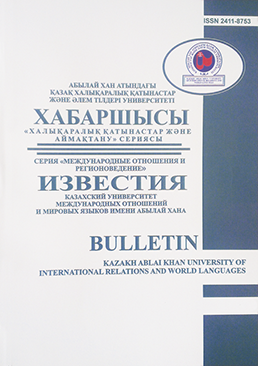
CULTURAL HERITAGE AS PUBLIC DIPLOMACY TOOL: INTERNATIONAL, NATIONAL, AND LOCAL MECHANISMS IN KAZAKHSTAN
DOI:
https://doi.org/10.48371/ISMO.2025.62.4.003Keywords:
public diplomacy, cultural heritage, preservation, protection, regulation, soft power, nation-states, international projectionAbstract
The management, preservation, and protection of cultural heritage serve as strategic instruments of contemporary public diplomacy. In an effort to expand their international image beyond a limited identity (e.g., resource or post-conflict), states increasingly adopt policies that emphasize the preservation of cultural heritage. These include local traditions, trade route artifacts, UNESCO-listed sites, and various intangible practices. This article examines the goals, methods, and challenges of heritage-focused diplomacy in the international, national, and regional dimensions, including innovations such as special status laws for heritage areas and new types of nominations. The study critically evaluates how heritage management redefines global perceptions and soft power potential, distinguishing between nation branding promotion and dialogue diplomacy. The qualitative analysis integrates primary sources – national laws and international agreements with secondary literature on public diplomacy, heritage preservation, and soft power theory. The theoretical framework draws on key concepts of public diplomacy, nation branding, and soft power. Key heritage narratives such as historical routes, traditional lifestyles, archaeological sites, intangible cultural practices, and unique architectural heritage are explored for their use in restoration and diplomatic work. Data for 2024-2025 highlight achievements: new inscriptions on UNESCO tentative lists, transnational “heritage corridors,” and international symposia on documentary heritage. There is a strategic shift from state-focused policies to multifaceted communicative engagement with global audiences. While there is significant potential for improving the nation’s image, the success of heritage diplomacy depends on moving beyond restoration to facilitating genuine, sustainable cultural dialogue, aligning external representation with internal governance, and leveraging digital innovation and local partnerships.
Funding: This scientific article has been prepared within the framework of the research project AR19679949, “Study of Cultural Heritage in Synergetic Paradigms,” funded under the program of grant financing for fundamental and applied research for 2023-2025 by the Ministry of Science and Higher Education of the Republic of Kazakhstan.